
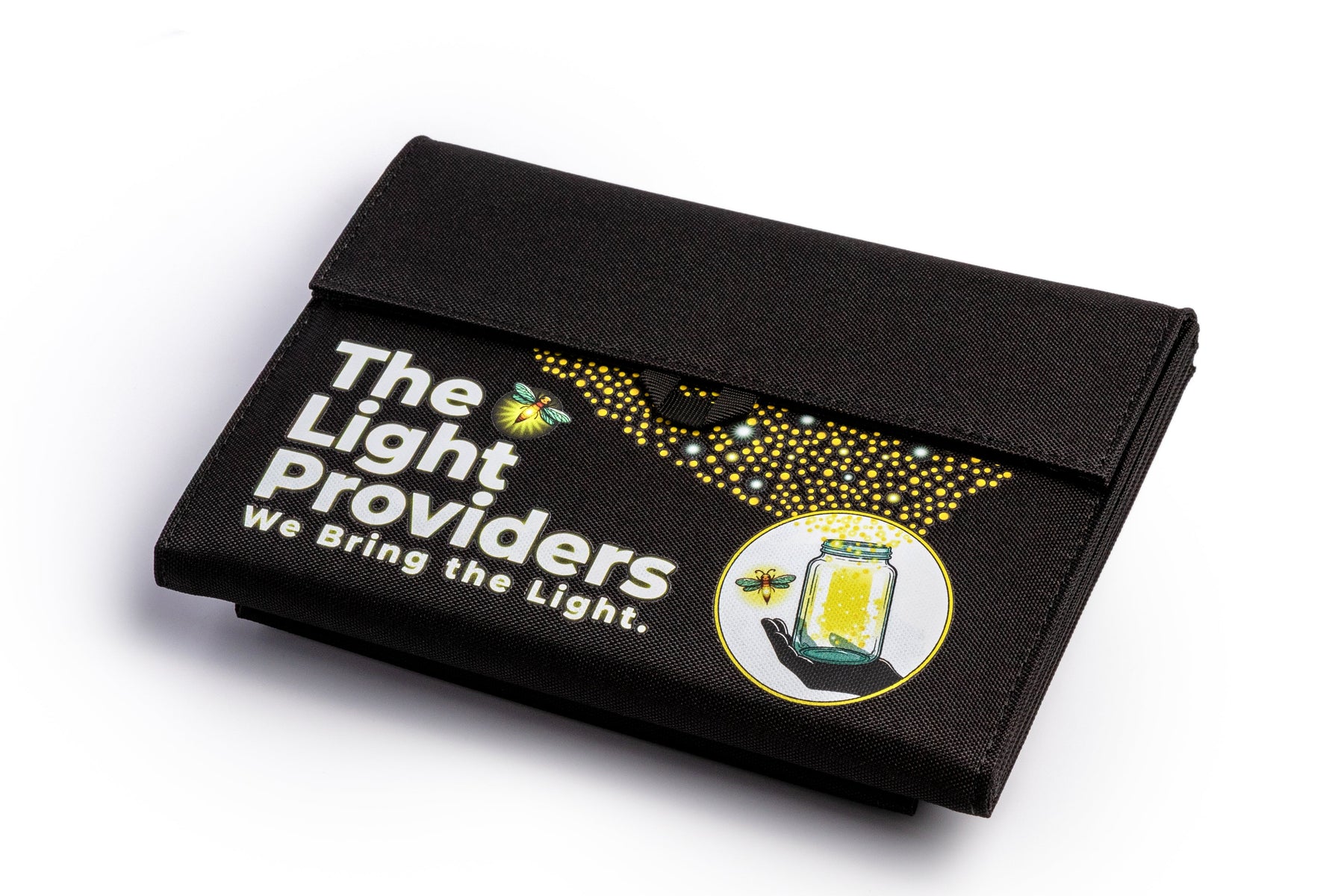
Portable Solar Panels
Independent Charging. No Grid Required.
Sunlight is the one utility that doesn't cut out.
The Challenge
What Does It Take to Set Up Solar Power in a Home?
Installing a traditional solar power system for a home is not as simple as placing a panel in the sun. A complete system requires multiple components working together to generate, convert, store, and distribute electricity safely.
A full solar setup typically includes solar panels to collect sunlight and convert it into electricity, an inverter to convert DC to AC for home use, battery storage for night and outage use, mounting and installation by professionals, and wiring and electrical integration into the home's system.
A full solar system can be expensive upfront, complex to install, difficult to transport, and not always practical for every home. For families living with unreliable electricity, especially in areas without stable infrastructure, installing a full system may be infeasible or too expensive.
A Simple Bridge
Immediate Power While You Plan Bigger.
While you are evaluating whether to install a full solar system, also consider the immediate support a portable solar panel provides if your family is dealing with constant blackouts.
A portable panel can't keep the refrigerator running or power a television. It can keep the cell phone charged and power wireless lights and power banks, which is still an immediate need when the electrical grid goes offline for several hours or more.
As a bridge, it's a flexible and affordable way to generate power when needed without spending thousands of dollars. The great thing about our portable solar panel is that if you take care of it, the panel should last for years without worry. No installation. No wiring. No batteries. No ongoing fuel costs. All you need is the sun.
Key Features
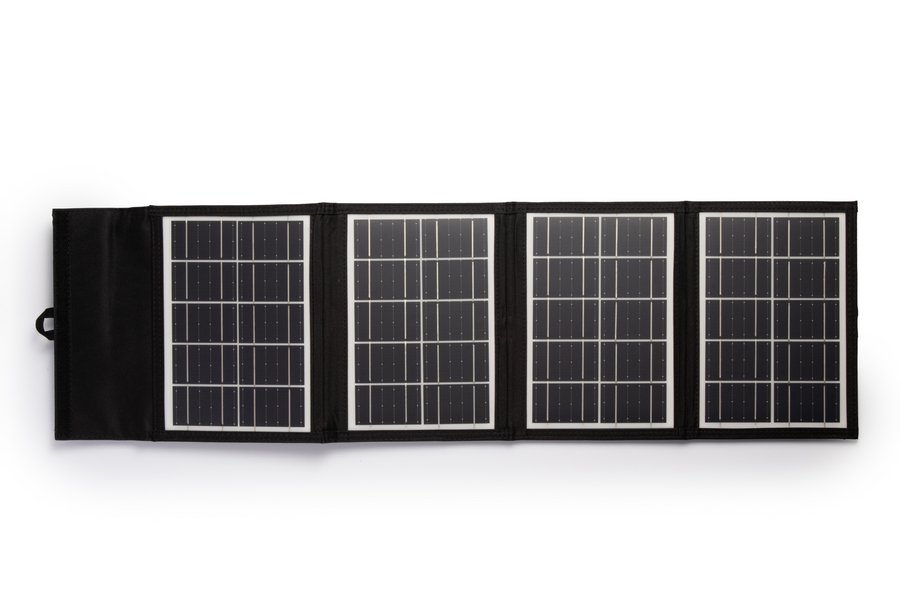
Foldable design
Compact for travel, storage, or shipment — folds flat for easy packing.
Multi-device USB output
Charge lights, phones, and power banks simultaneously from a single panel.
No installation required
Window-mount, prop outdoors, or hang in sunlight — no tools needed.
Compatible with wireless lights
Designed to work directly with The Light Providers' wireless rechargeable lights.
Durable outdoor construction
Weather-aware construction designed for outdoor use and real-world conditions.
Built-in usage guidance
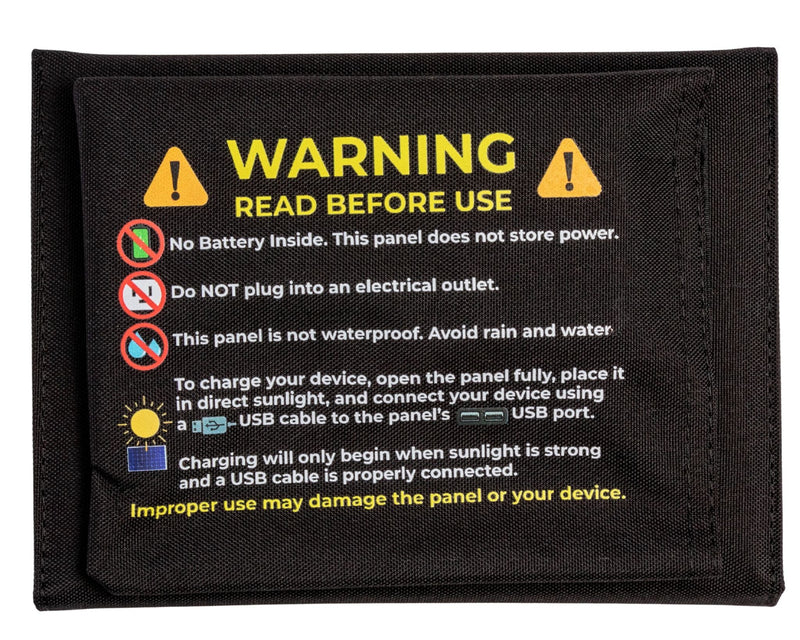
Clear guidance printed directly on the panel — designed for first-time solar users.
The Light Providers Solar Panel Warning
Why We Include Usage Guidance on Every Panel
After testing our products in real-world environments, we realized something important. Most issues don't come from the product. They come from unclear expectations and misuse. In many of the communities we work with, solar panels are not commonly used. Instructions are often assumed rather than explained.
That's why we made a deliberate decision to include clear, visible guidance directly on every panel. During our field testing in Sierra Leone, we observed challenges such as expecting the panel to store power on its own, attempting to plug the panel into a wall outlet, and not understanding that strong sunlight is required for charging. These are not user errors. They are design and communication gaps we chose to close.
How It Fits Into Daily Life
Morning to Evening — A Predictable Power Cycle
Morning: place the solar panel in a sunny window or outside.
Afternoon: the panel has charged your light and your phone.
Evening: the grid cuts out — and nothing changes for you. That's the daily rhythm solar makes possible in a home with unreliable electricity.
Q: How much sunlight does the panel need to fully charge the light?
In direct sunlight, most charges complete within 4 to 6 hours. Partial sun will extend charging time, but will still produce usable power throughout the day.
Q: Will it work in tropical climates?
Solar panels perform exceptionally well in tropical climates, which typically have high solar irradiance and consistent sun exposure — ideal conditions for charging. All of our products have been tested and used by real people in Sierra Leone who live on an unreliable grid.

Independent Charging. No Grid Required.
The powerful 15W solar cells charge two lights in under 5 hours, providing a full day of light and power in a single afternoon.