Skip to content

Reliable Backup Lighting for Power Outages, Storms, and Emergencies

Be Ready Before the Lights Go Out.

Power outages do not wait for a convenient time. Storms hit at night. Grid failures happen without warning. Hurricanes knock out electricity for days. Most households are not prepared for when the lights go out. This page is for the families who want to be ready before it happens, not scrambling after.

The Problem with how most households handle Power Outages

Most people have some version of the same backup plan. A flashlight that is probably dear or may only hold up for a couple of hours. There is a drawer full of candles, which is not a plan. Maybe a power bank that has not been charged in months. If you're old school, there may be a dusty kerosene lamp tucked away in the back of a cabinet. It feels like enough until the power goes out, and it is not.

Here is what actually happens when the grid fails, and the backup plan meets reality.

The flashlight is dead or missing.
Flashlights require batteries that drain even when the light is not in use. Most households discover their flashlight is dead or their batteries are corroded at exactly the moment they need light. A single flashlight cannot illuminate a room either, because it illuminates a beam. That is not enough when you are moving through a house with children or elderly family members in the dark.
Candles are a fire hazard.
Candles feel like a reasonable backup until you consider what they actually are: an open flame in a home where people are moving around in the dark, often with children, pets, and flammable materials nearby. The U.S. Fire Administration estimates that candles cause thousands of house fires every year, with a significant portion occurring during power outages. Candles also produce carbon monoxide and soot in enclosed spaces, creating health risks in addition to fire risk.

Power banks run out and cannot recharge themselves
A power bank is useful for keeping a phone charged during a short outage. But most power banks provide one to two full phone charges before they are depleted. During a multi-day outage, such as a major hurricane or widespread grid failure, a drained power bank is useless without a working outlet to charge it. And when the power is out, there is no outlet.

These are not solutions. These are delays. In a real emergency, delays cost more than most people expect.

The Solution: Rechargeable Solar Lighting That Is Ready When You Need It
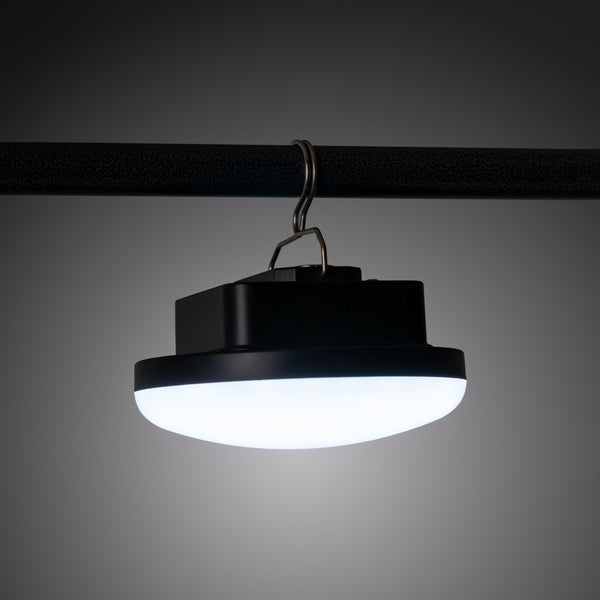
A reliable home emergency lighting system has two components that work together: a wireless rechargeable LED light that provides room-level illumination for up to 8 hours on high, and a portable solar panel with two USB-A ports that recharges the light and your devices directly from sunlight when the grid is down.

The solar panel contains no battery. It generates power from sunlight in real time and delivers that charge directly to whatever is connected through its two USB-A ports. Because it contains no lithium battery, it requires no special storage and poses no fire or heat risk. Place it in a window or outside during daylight, and it continuously charges your light and devices as long as the sun is up.

The wireless light contains a built-in rechargeable battery. Keep it charged every 3 to 4 months under normal conditions so it is always ready. When an outage hits, you have up to 8 hours of reliable room-level light immediately. There are no batteries to find, no flame to manage, and no power bank limit to worry about.

Our products come with a usage guide and safety instructions to ensure correct setup and operation from the start. This is not just a product you buy and put in a closet. It is a system designed to be ready, used correctly, and depended on when it matters most.

Every product we sell is field-tested in Sierra Leone, which is one of the most challenging electricity environments in the world. Their power outages are not occasional inconveniences but daily realities. When we say a light runs up to 8 hours on high, that is a field number, not a lab number. It is what our products actually do in real conditions.

Why Traditional Backup Solutions Fall Short

Most emergency lighting advice has not changed in decades. Here is an honest look at why the standard recommendations are not enough for modern households facing extended outages.

Candles

  • Risk level: High
  • Limitation: Open flame in a dark home is a fire and health hazard. Produces carbon monoxide and soot. Provides minimal illumination for a large space. Not appropriate in homes with children, pets, or elderly residents.

Disposable Flashlights and Battery-Powered Lights

  • Risk level: Low
  • Limitation: Batteries drain whether in use or not. Most households discover batteries are dead during an outage. Directional beam light is insufficient for room-level visibility. Disposable batteries are a recurring cost and a source of environmental waste.

Standard Power Banks

  • Risk level: Low
  • Limitation: Provide one to two phone charges before depletion. Cannot recharge without a working outlet. Useless during multi-day outages unless paired with a solar panel. Do not provide room lighting.

Portable Generator

  • Risk level: Moderate to high
  • Limitation: Requires fuel storage, ventilation, and maintenance. Cannot be operated indoors. Fuel runs out during extended outages, and gas prices rise if the entire region is without power. Dangerous if used incorrectly.

Wireless Rechargeable Light and Solar Panel

  • Risk level: None
  • Limitation: None for standard household use. Provides room-level illumination for up to 8 hours on high. The solar panel recharges the system daily using sunlight, with no fuel or outlet required. Safe, clean, and effective for outages of any duration.

When You Need Emergency Lighting Most

Storm-Related Outages

Severe thunderstorms, ice storms, and wind events are the leading causes of power outages across the United States. They hit fast, they can last for days, and they often occur at night when you need light the most. A rechargeable light that is already charged and ready requires nothing from you in the moment except pressing a button.

Hurricanes and Natural Disasters

Hurricane-related outages can last days to weeks in affected areas. Grid restoration after a major storm is slow, unpredictable, and uneven. Some neighborhoods are restored in 24 hours, while others wait two weeks. A solar-powered lighting system provides a self-sustaining daily cycle regardless of how long the restoration takes. As long as the sun rises, the system recharges.

Rolling Blackouts

Grid operators in California, Texas, and other states have increasingly relied on rolling blackouts to manage demand during heat events and supply constraints. These outages can happen with little notice and recur multiple times within a short window. Having a charged backup light means these events are an inconvenience rather than a crisis.

Nighttime Safety During Outages

Moving through a home in complete darkness poses a genuine risk of injury, particularly for elderly family members, young children, and anyone unfamiliar with the layout. A wireless rechargeable light placed in a central room provides enough illumination to move safely, find what you need, and manage the situation calmly.

Extended Grid Failures

Cyberattacks on grid infrastructure, severe winter storms, and catastrophic weather events can knock out power for extended periods across large regions. During these events, conventional backup solutions fail quickly. A solar-powered system remains functional as long as sunlight is available, which, in most U.S. regions, is every day regardless of the season.

How Many Lights Does Your Home Need

A single light can cover one room. Most households need more than one. Here is a simple guideline for planning your home emergency lighting setup.

One-bedroom home or apartment

  • Minimum: One wireless rechargeable light
  • Recommended: Two lights, one for the main living area and one for the bedroom or hallway

Two to three bedroom home

  • Minimum: Two wireless rechargeable lights
  • Recommended: Three lights, main living area, primary bedroom, and one additional light for the kitchen or hallway

Four or more bedroom home or household with children or elderly residents

  • Minimum: Three wireless rechargeable lights
  • Recommended: Four or more lights distributed across living areas, bedrooms, and high-traffic areas
Each additional light pairs with the same solar panel. The two USB-A ports allow two lights to charge simultaneously during the day. With full sunlight, two lights can be charged from being completely dead to fully charged in five hours. Keeping your full system ready by evening.

Be Ready Before the Lights Go Out.

Power outages do not announce themselves. Storms, grid failures, and natural disasters happen on their own schedule. The only preparation that works is the preparation you do before the emergency, not during it.

A charged wireless light and a solar panel sitting in your home costs nothing to maintain and provides hours of reliable light the moment the grid fails. That is preparedness you can actually depend on.

Recommended Emergency Lighting Kits

Solar One-Light System

One wireless rechargeable light, one portable solar panel, and one clear utility bag to store them in. The right starting point for apartments, small homes, or anyone building their emergency kit for the first time. Provides up to 8 hours of room-level illumination on high and recharges daily from sunlight.
Shop the Solar One-Light System

Family Home Kit (Duo System)

Two wireless rechargeable lights and one portable solar panel. Covers two rooms simultaneously and charges both lights during the day through the panel's two USB-A ports. Designed for households that need reliable lighting in multiple spaces during an outage.

Shop the Family Home Kit

Emergency Lighting Frequently Asked Questions

How long does the wireless light run during a power outage?
Up to 8 hours on high. Lower brightness settings extend runtime beyond that. Our runtime figures come from field testing in real conditions, not lab estimates.

How does the solar panel work if the power is out?
The solar panel does not need the grid. It generates power directly from sunlight and delivers that charge through two USB-A ports to whatever is connected. Place it in a sunny window or outside during daylight, and it charges your light and devices continuously as long as the sun is up. It contains no battery, so it works in real time — when the sun is up, it is charging.

Can I use the solar panel indoors through a window?
Yes. A south-facing window with direct sunlight will generate usable charge. Charging will be somewhat lower than direct outdoor placement, but sufficient for daily recharging in most household situations.

How do I keep the system ready for an emergency?
Keep the wireless light plugged in and charged during normal conditions, just as you would charge a phone. When the light is fully charged, it is ready for an outage immediately. Check the charge level periodically and recharge as needed to keep it at or near full capacity.

Is this safer than using candles during a power outage?
Significantly safer. Our wireless LED lights produce no flame, carbon monoxide, or soot. They can be placed in any room, left unattended, and used safely around children and pets. Candles are a leading cause of home fires during power outages. LED lighting eliminates that risk.

How many devices can the solar panel charge at once?
The solar panel has two USB-A ports and can charge two devices simultaneously. This includes any combination of wireless lights, phones, power banks, and other USB-charged devices.

Does the solar panel work in winter or cloudy conditions?
Yes, at reduced efficiency. Cloudy conditions reduce output but do not eliminate it. In most U.S. regions, even overcast days produce enough sunlight for partial charging. We recommend keeping the wireless light fully charged under normal conditions so your emergency reserve is always topped up, regardless of the weather.

Can I use this for camping or travel in addition to home emergencies?
Yes. Our lighting system is designed for situations where reliable power is unavailable, including camping, travel to areas with unreliable electricity, and international visits to regions with frequent blackouts. See our Travel Lighting page for more on international use.

Compare products

{"one"=>"Select 2 or 3 items to compare", "other"=>"{{ count }} of 3 items selected"}

Select first item to compare

Select second item to compare

Select third item to compare

Compare