

Blackout Preparedness Guide: How to Stay Ready When the Power Goes Out
Practical, real-world advice for staying comfortable, safe, and prepared during a power outage. Covers lighting, charging, food safety, seasonal differences, and what actually works.
In this guide
- Why most people aren't prepared
- Know the scope of your outage
- Build one emergency kit
- Lighting your home properly
- How many lights you actually need
- Charging devices without power
- Understanding solar and power limitations
- Generators vs practical alternatives
- Food and refrigeration without power
- Seasonal preparation
- Keep life normal during a blackout
- Check your system twice a year
- Common mistakes to avoid
A blackout isn't just an inconvenience. It's a full disruption of everything in your home that depends on electricity, which turns out to be most of it. The lights. The refrigerator. The phone charger. The router.
Most households are underprepared for outages, not because they don't care, but because the moment it's urgent is exactly the wrong time to start preparing. Stores run out of flashlight batteries. Candles are gone from the shelves. Ice is sold out by mid-morning.
The families who stay comfortable during a blackout are almost always the ones who prepared before the storm warning went out. This guide covers thirteen things you need to know before the lights go out. Practical advice that reflects how people actually live, what actually helps, and what common backup solutions get wrong.
1. Why Most People Aren't Prepared
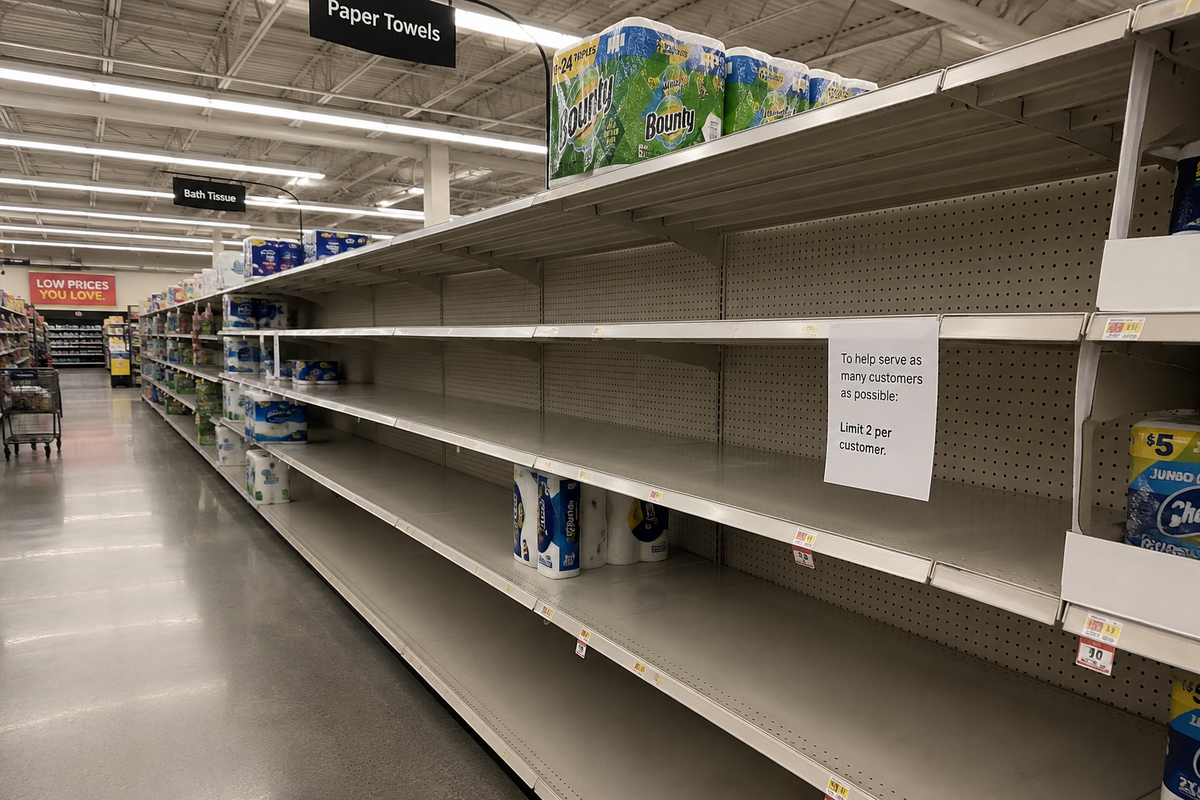
Empty Shelves Prior to a Storm
The honest answer is that most people have experienced a blackout lasting two or three hours that resolved on its own. That experience creates a false baseline. A sixteen-hour outage is genuinely disruptive. A multi-day outage changes how your household functions at a fundamental level.
The most common preparation mistake is relying on whatever is already in the house. A flashlight from three years ago with batteries that may or may not still hold a charge. A phone at 40 percent when the power cuts. That's improvisation, and improvisation under stress is consistently worse than preparation done in advance.
Stores that carry flashlights, batteries, and ice all experience the same demand spike the moment a storm warning goes out. The household that prepared a week earlier paid standard prices and spent none of that stressful afternoon hunting for supplies. Preparation isn't about fear. It's about spending time now, rather than being frustrated during the event itself.
2. Know the Scope of Your Outage
One of the first things to do when a blackout hits is to understand how widespread it is. Check with a neighbor. Look out the window to see whether nearby streets and buildings are also dark. If you have a cell signal, check your utility's outage map.
A localized equipment failure on your street is typically resolved within hours. A widespread grid failure or storm-related outage affecting a large area may take much longer. Knowing the scope also helps you decide whether to stay put or seek a different location. For most outages, staying home is the right choice.
3. Build One Emergency Kit and Know Exactly Where It Is
The single most important thing you can do to prepare for a blackout is to store everything you need in one location you can find without thinking. Not scattered across three rooms and two closets. One designated spot in or near the main space where your household gathers.
When the power cuts, you shouldn't be searching for anything. The kit is where it always is. You go to it. You have what you need.
What to include in your kit
- One wireless rechargeable light per person in the household, plus two lights per main living space. A portable solar panel for outages lasting more than one day.
- An emergency hand-crank or solar-powered radio. A battery-free emergency radio is the only reliable way to receive weather alerts when cellular fails.
- A well-stocked first aid kit with bandages, antiseptics, pain relievers, and any prescription medications.
- For winter outages, sleeping bags rated for cold temperatures, extra blankets, and hand warmers.
- For summer outages, portable battery-powered fans, ice packs, and mosquito spray.
- A deck of cards, checkers, chess, a board game, or physical books.
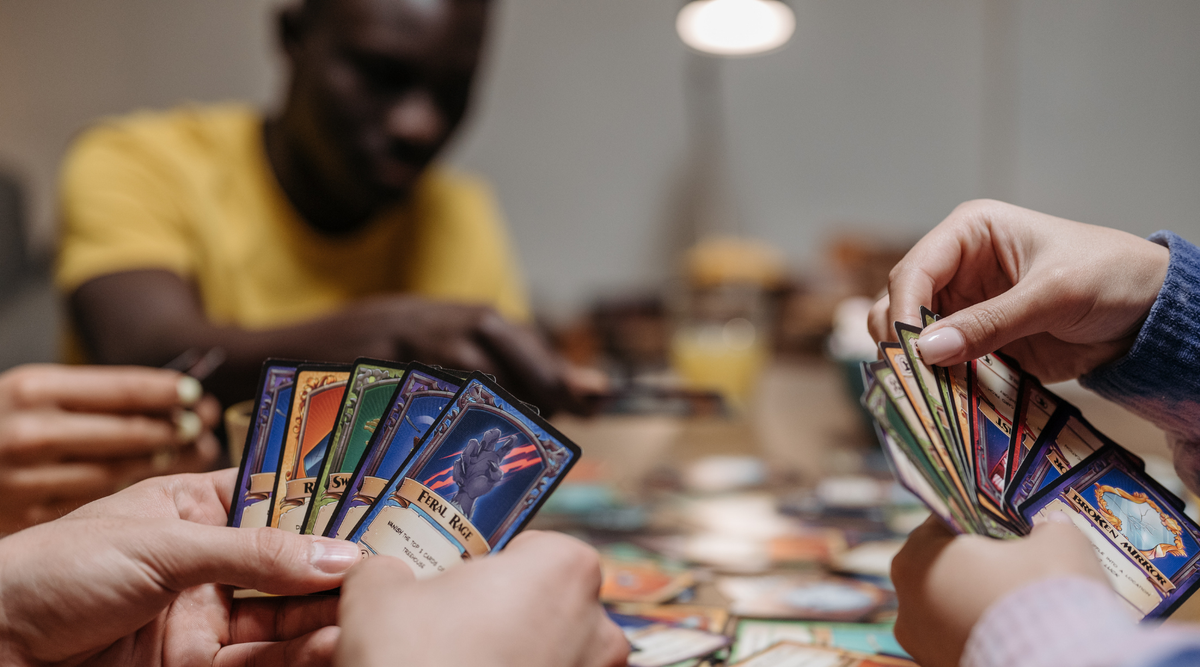
Playing Cards During a Power Outage
Key Principle
Store everything together in one location you can reach without thinking.
Put the kit in a bin, a bag, or a designated shelf in the space where your household spends evenings. The closer it is to where you'll be during a blackout, the more useful it is.
4. Lighting Your Home Properly
The Problem With Phone Lights
When a blackout happens, the first thing most people do is turn on their phone flashlight. This is one of the most counterproductive responses to a power outage, and it happens almost automatically.
Your phone is your GPS. Your camera. Your communication line to family, emergency services, and information about the outage. Every minute the phone flashlight runs is a minute of battery being consumed by the one task your phone is worst suited for.
A wireless rechargeable light draws no power from your phone's battery and provides better illumination than a phone screen held up in a room. Turn on your dedicated light first. Conserve every percentage point of battery as if it matters, because during a long outage, it does.
Flashlights Are Navigation Tools, Not Room Lighting
A flashlight is designed for one person moving in one direction. It produces a directional beam that lights what you point it at and leaves everything else dark. For navigating to the bathroom, it works. For cooking, helping children with homework, playing a game, or doing anything that requires both hands and good ambient visibility, a flashlight is a poor substitute for actual room lighting.
A flashlight lights one person. A properly placed light can illuminate an entire space.
5. How Many Lights You Actually Need
Most households underestimate how many lights they need because they think of lighting as a single household function rather than an individual one. During a blackout, people in your household will be in different rooms at different times.
The right approach is one light per person in the household. Each person has their own light, takes it with them when they move, and stays responsible for keeping it charged. They're never dependent on waiting for someone else to bring the light to them.
For shared spaces, plan for two lights in each main living area. One can be on a tripod for overhead room coverage, while the second travels with whoever needs to move. Each bedroom needs one light, ideally wall-mounted so it's in a consistent place every night and reachable in the dark by touch alone.
A tripod-mounted wireless light, extended to full height in the main living space, provides overhead coverage that evenly fills the room. A wall mount installed on a calm afternoon takes five minutes and provides years of instant-access lighting during every future outage.
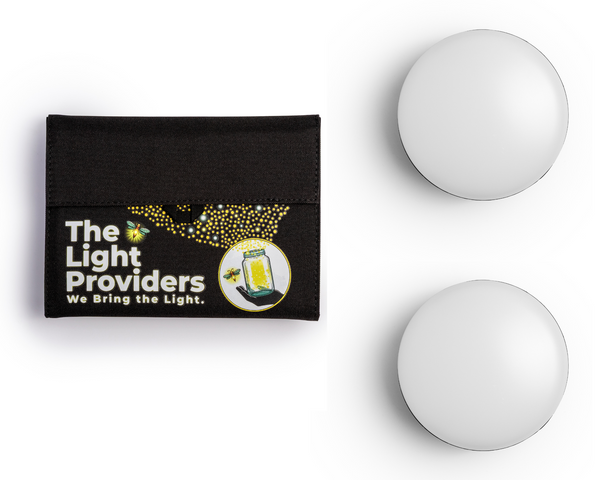
Featured Product
Wireless Rechargeable Light + Solar Panel Bundle
The Light Providers' wireless rechargeable lights, adjustable tripods, wall mounts, and portable solar panels give your household everything it needs for reliable illumination during any outage. No installation required. No fuel. No fumes.
Pre-mounted before an outage, they provide immediate light the moment the grid fails. Charged from a solar panel during the day, they run through the night without depending on the grid to return.
6. Charging Devices Without Power
Power banks are useful for extending how long your phone lasts before it needs a charge. They are not a complete solution once depleted because, during a blackout, there is no outlet to recharge them.
The solution is a portable solar panel that recharges your power bank and other devices from sunlight during the day. With solar charging, your devices don't have a fixed charge window that depletes and doesn't recover. They recharge every day the sun is out.
During an outage, charge at every opportunity. If the grid comes back on for two hours, charge everything that can charge. Treat charging the way you treat fuel management and fill up whenever you can.
Prioritize in this order. Emergency radio first. Then phones for communication. Then wireless lights. Then secondary devices and power banks.
7. Understanding Solar and Power Limitations
Rooftop solar panels generate electricity during daylight and feed it into your home's electrical system, helping reduce how much power you draw from the grid. However, when the grid goes down, most residential solar systems automatically shut off. This is due to a built-in safety feature that prevents your system from sending electricity back into power lines.
Traditional rooftop and plug-in solar systems are designed as grid supplements, not replacements. Without battery storage or grid-forming equipment, solar alone cannot function when the grid is unavailable. This often surprises homeowners who expect solar to keep their lights on.
In contrast, portable solar panels operate independently of your home's electrical system, allowing them to charge devices like phones, lights, and power banks directly from sunlight during outages.
8. Generators vs Practical Alternatives
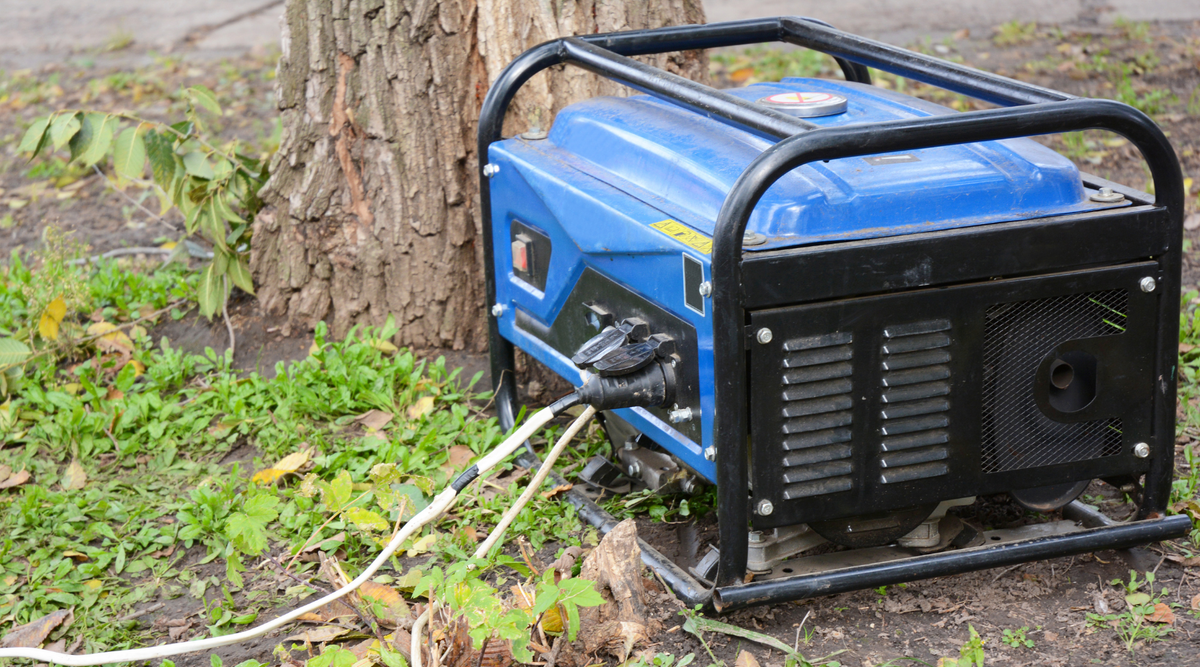
Generator Running Outside
Generator Safety Is Not Negotiable
A generator is a powerful option for extended outages, but it comes with real tradeoffs. Running a generator in a garage, a basement, or near an open window produces carbon monoxide that accumulates in enclosed spaces. Carbon monoxide is odorless and colorless. It causes incapacitation and death before most people realize anything is wrong.
Power Stations as a More Practical Option
For most households, a portable power station is a safer and more practical alternative to a generator for short-term outages. Power stations are large rechargeable battery units that can power lights, charge devices, and run small appliances for hours or days. They produce no fumes and are safe indoors. They charge from a wall outlet during normal conditions or from a solar panel during an outage.
Uninterruptible Power Supply (UPS)
A UPS kicks in the moment power cuts, with zero lag, keeping your router, modem, medical devices, and critical electronics running without interruption for anywhere from 20 minutes to several hours. For most households, a UPS handles the first phase of an outage.
Safety Warning
Never run a generator indoors or in an attached garage.
This is a carbon monoxide risk that causes deaths every year. Generators must operate outdoors, away from windows and vents. Cars may only be used for heating or cooling when parked fully outside.
9. Food and Refrigeration Without Power
Keep the refrigerator and freezer doors closed from the moment the power is cut. A refrigerator maintains safe temperatures for roughly four hours with the door closed. A freezer holds safe temperatures for 24 to 48 hours, depending on how full it is. Every time the door opens, cold escapes and the safe window shortens.
Eat perishable foods first. Whatever is closest to its expiration date and whatever will spoil fastest should be the priority for your first meals during an outage.
Store ice in advance if you have a warning. Ice packs are preferable to loose ice because they melt more slowly and don't create water as they melt.
Plan meals around canned goods, dried foods, and snacks that don't require heat or cold. Don't forget food for pets, and make sure you have a manual can opener on hand.
10. Seasonal Preparation: Summer and Winter Are Different Problems
Summer Blackouts
The priorities in a summer outage are airflow, hydration, and food safety. Without air conditioning or fans, interior temperatures rise quickly. A battery-powered portable fan makes an enormous difference in comfort. Solar charging is highly effective during summer outages — long sunny days mean a wide daily charging window.
Hydrate consistently and proactively. Heat impairs the body's thirst signal, and dehydration sets in faster than people expect in a hot house without climate control.
Winter Blackouts
Winter outages carry different risks. Cold temperatures, early darkness, and longer nights mean that both warmth and reliable lighting are critical. Layer clothing before you get cold rather than after. Sleeping bags rated for cold temperatures are one of the most practical winter preparedness supplies.
Winter nights are long. A household that loses power at 5 PM in January could face up to 13 hours of darkness before sunrise. Pre-mounted lights in key locations ensure the transition from grid power to battery-powered lighting happens in seconds rather than minutes.
11. Keep Life Normal During a Blackout
The stress of a blackout is largely psychological. Routines are disrupted. The familiar background sounds of the house disappear. The families who handle blackouts best are the ones who fill that gap with something rather than sitting in the discomfort of the disruption.
Card games, checkers, chess, and board games are consistently the most effective solutions. They require no power, they work by the light of a single wireless lamp, they involve the whole household, and they convert what could be an anxious evening into something memorable.
A properly positioned tripod light or wall-mounted light in the gathering space is the difference between a family that can comfortably play a game together and one sitting in near-darkness waiting for the grid to return.
12. Check Your System Twice a Year
A kit that is assembled and never checked is unreliable. Batteries degrade. Devices may have been used and not recharged. Seasonal supplies may need to be added or rotated.
Check your emergency kit twice a year on a consistent schedule. The beginning of the year in January is a natural first checkpoint. The Fourth of July weekend is a practical summer checkpoint.
At each check, confirm all lights are charged and functioning. Verify that the first aid kit is stocked and that nothing has expired. Aim for a quarterly check if your household is in an area with frequent outages.
13. Common Mistakes to Avoid
- Using your phone as a flashlight immediately. Turn on your dedicated wireless light first and conserve your phone for communication, GPS, and information only.
- Relying on flashlights for room lighting. Flashlights are for navigation. A household planning to manage a long evening with only flashlights will be uncomfortable and strained.
- Running a generator or car indoors or in an attached garage. This is a carbon monoxide risk that causes death every year.
- Not accounting for seasonal differences. A summer kit and a winter kit need different supplies. Reassess what's in your kit when seasons change.
- Opening the refrigerator and freezer repeatedly. Every opening shortens the safe window for your food.
- Waiting until the outage to set up lights and mounts. A wall mount installed during a calm afternoon takes five minutes and provides years of instant-access lighting.
Preparation Reduces Stress. Simple Systems Work Best.
The best blackout preparedness setup is not the most expensive or the most technically complex one. It is the one that is actually ready when the power cuts.
One emergency kit in one location near where your family gathers. One light per person plus two for each shared living space. A tripod and wall mounts should be set up before any outage occurs. A portable solar panel that charges during any day with the sun. A hand-crank emergency radio. A first aid kit. Seasonal supplies matched to the conditions you actually face. Card games and a physical book within reach.
Check it in January. Check it around the Fourth of July. Everything in its place. Nothing to search for. Ready before you need it.
Explore Portable Solar Lighting Systems Designed for Real-World Use
The Light Providers' wireless rechargeable lights, adjustable tripods, wall mounts, and portable solar panels give your household everything it needs for reliable illumination during any outage. No installation required. No fuel. No fumes.